
Capitalism vs. Socialism: A Philosopher's Neutral Breakdown of the Debate Tearing the US Apart
Capitalism and socialism are two powerful ideas that shape how societies organize their economies, distribute resources, and define justice. In the US, the debate between these philosophies has become a cultural fault line—sometimes heated, often polarized. But through a philosophical lens, the differences reveal deep questions about human nature, freedom, equality, and the common good.
NON-STOIC PHILOSOPHIES
1/17/20261 min read

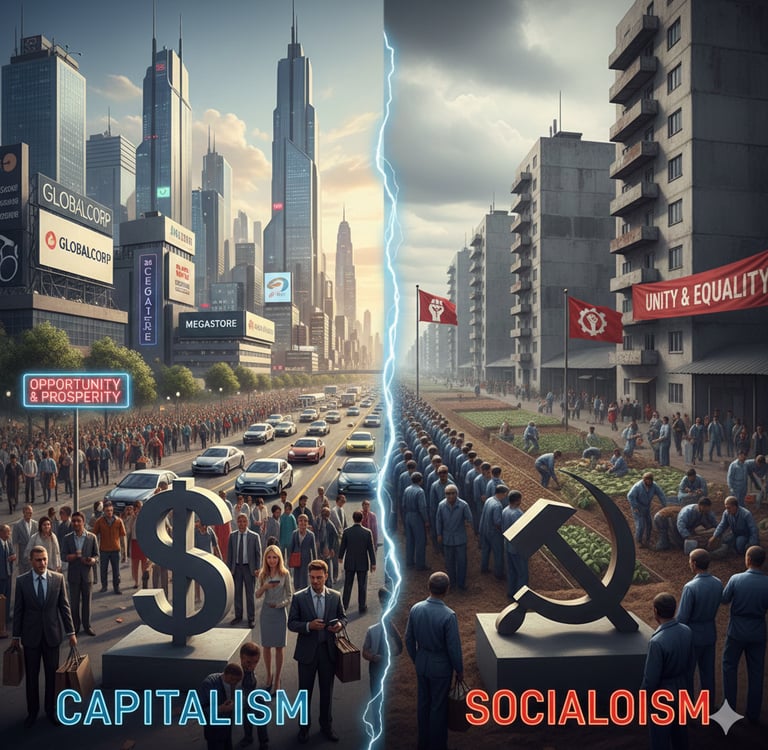
What Is Capitalism?
At its core, capitalism relies on private ownership of businesses and property. It is driven by competition, profit motive, and free markets where prices are determined by supply and demand. Capitalism encourages innovation and rewards individual effort, arguing that letting people pursue their economic interests leads to the most efficient use of resources.
Supporters say capitalism fosters personal freedom and economic growth, creating wealth and opportunity. Critics point to inequalities it can produce, arguing that profit motives sometimes undermine social welfare, environmental health, and fairness.
What Is Socialism?
Socialism emphasizes collective or governmental ownership of major industries and resources. It aims to reduce economic inequality by distributing wealth more evenly and ensuring everyone’s basic needs—like healthcare, education, and housing—are met. Rather than profits, socialist economies focus on planning and cooperation to meet human needs.
Proponents argue socialism is fairer and more ethical by prioritizing social welfare and reducing disparities. Opponents worry about inefficiencies, lack of incentives, and potential restrictions on individual freedoms.
Philosophical Underpinnings
The capitalism-socialism divide boils down to competing values:
Individualism vs. Collectivism: Capitalism values individual choice and responsibility; socialism prioritizes community and shared well-being.
Freedom vs. Equality: Capitalism emphasizes economic freedom; socialism stresses equal access and reducing disparity.
Market Efficiency vs. Social Justice: Markets are seen as best allocators by capitalists; socialists argue fairness sometimes necessitates intervention.
Both systems wrestle with balancing autonomy and responsibility, growth and care. No pure form exists; most countries blend elements of both.
Why the Debate Matters Today
In the US, this debate shapes policy, identity, and activism. Questions about universal healthcare, taxation, labor laws, and social programs reflect deeper disagreements over justice and human flourishing. Understanding the philosophical roots helps us move beyond slogans—to explore nuanced solutions that respect dignity, innovation, and equity.
Final Thought
Capitalism and socialism provide different answers to fundamental questions about how society should work, who benefits, and what fairness means. Recognizing their strengths and limitations invites thoughtful conversation—a path to bridge divides and build a system that truly serves all.
Waste no more time arguing about what a good man should be. Be one - Marcus Aurelius
We suffer more often in imagination than in reality - Seneca
Wealth consists not in having great possessions, but in having few wants - Epictetus