
"Deepfakes" and the Death of Truth: What Happens When We Can't Trust Our Own Eyes?
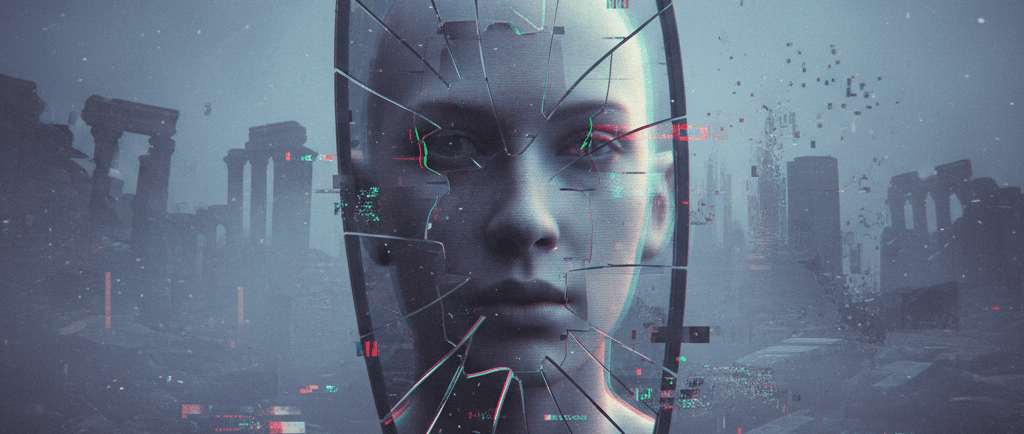
Imagine watching a video of a world leader declaring war, or seeing a loved one’s voice in a message they never recorded. Welcome to the unsettling age of deepfakes, where artificial intelligence blurs the line between what’s real and what’s expertly faked.
NON-STOIC PHILOSOPHIES
1/3/20262 min read
What Are Deepfakes — and How Do They Work?
Deepfakes use sophisticated artificial intelligence — especially a method called Generative Adversarial Networks (GANs) — to learn how people look, speak, and move. With enough data, these systems can create videos, images, or audio clips that mimic real people so convincingly that even experts struggle to tell the difference.
Anyone with a smartphone and an internet connection can now generate face swaps or fake audio with basic apps. High-powered versions let threat actors create digital doubles capable of saying or doing anything, instantly spreading confusion or manipulating opinions worldwide.
When the Truth Is Up for Grabs
It’s not just about fun or entertainment. Deepfakes are increasingly deployed to spread false news, ruin reputations, and commit fraud. Imagine a politician's “confession” broadcast just before an election, or a CEO appearing to announce a major scandal — all fabricated with precision.
Financial and political stakes are massive, and the psychological impact is profound. When people begin to doubt the authenticity of every photo, video, or voice recording, public trust erodes. The very concept of evidence loses its meaning.
Why "Seeing Is Believing" No Longer Works
For centuries, visual and audio proof were the gold standard. Today, deepfakes undermine this primal trust. Now, anything can be made to look real. The unsettling result is not just misinformation, but widespread uncertainty: who can know what’s true?
Social media accelerates the problem, distributing these fabricated realities instantly. The psychological toll includes anxiety, paranoia, and a breakdown of shared facts — essential for democratic debate and social harmony.
How Can We Fight Back?
Research labs, tech companies, and cyber defenders are racing to develop forensic techniques that spot deepfake “tells” — strange eye movements, unnatural blinking, or glitches in speech patterns. But detection methods are always playing catch-up with evolving technology.
Education and skepticism are more crucial than ever. Instead of accepting digital media at face value, everyone must question sources, demand verification, and stay vigilant against manipulation.
The Future: Reclaiming Trust in the Digital Age
Deepfakes are powerful, and their impact will only grow. But the long-term solution isn’t just technical; it’s cultural. Societies must learn to slow down, verify, and insist on transparency — recognizing that in a world overflowing with synthetic media, critical thinking is the last refuge of truth.
Waste no more time arguing about what a good man should be. Be one - Marcus Aurelius
We suffer more often in imagination than in reality - Seneca
Wealth consists not in having great possessions, but in having few wants - Epictetus