
Diogenes the Cynic: The Man Who Lived in a Barrel (And What He Can Teach Us About Modern Consumerism)
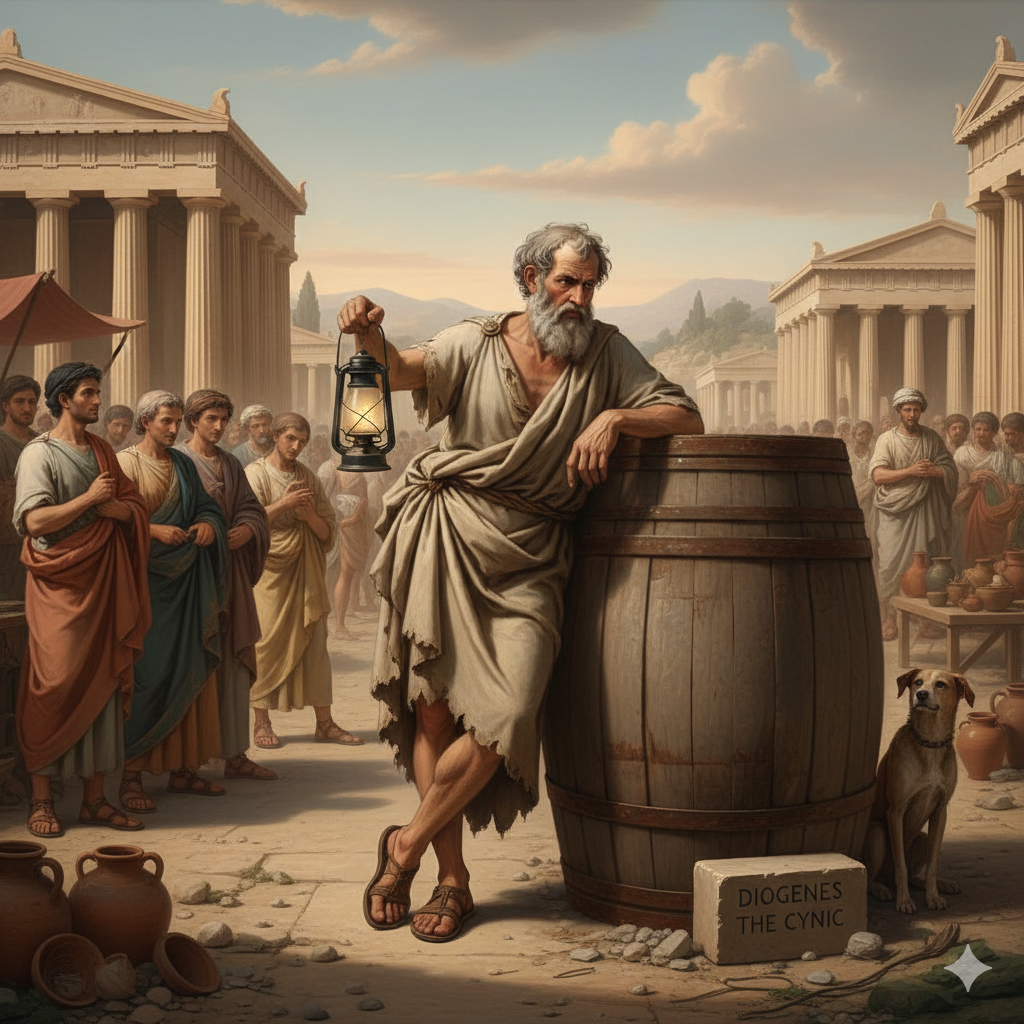
Imagine a philosopher who rejected all societal norms, laughed at luxury, and famously lived in a large clay jar, often called a barrel in ancient Athens. That was Diogenes the Cynic, a figure whose rebellious life challenges us to rethink modern consumerism and our endless appetite for more.
NON-STOIC PHILOSOPHIES
1/4/20261 min read
Who Was Diogenes?
Born in Sinope around 400 BCE, Diogenes embraced a radical philosophy called Cynicism, which called for living simply and authentically by rejecting social conventions and material excess. After a scandal involving debased currency, he fled his hometown and took to wandering Athens, practicing severe self-sufficiency and using humor and provocation to expose pretenses.
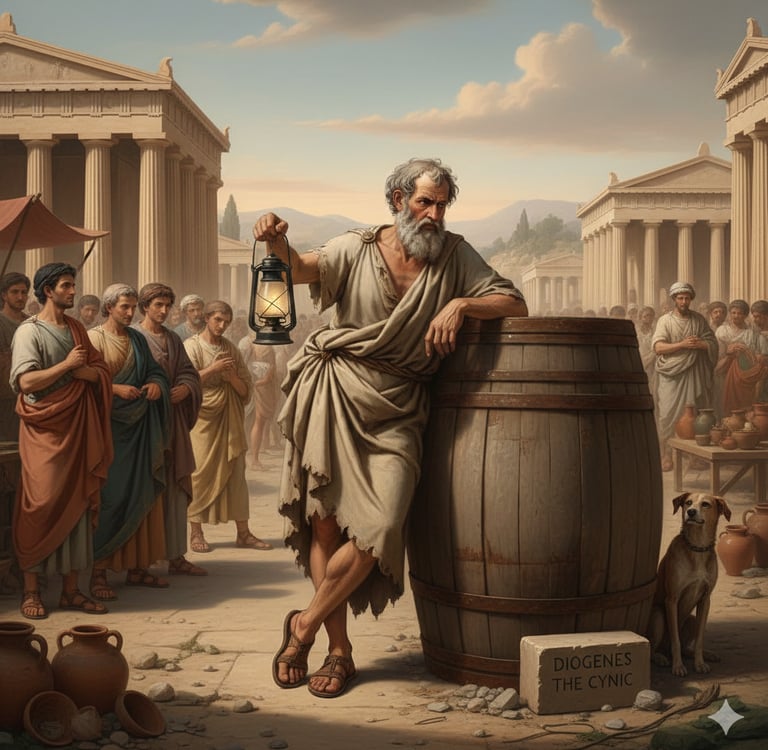
His unconventional behavior became legendary: he carried a lantern during the day “looking for an honest man” and once told Alexander the Great to step aside because he was blocking the sun.
Living Light: The Radical Simplicity of Diogenes
By choosing to live in a barrel and own almost nothing, Diogenes embodied a philosophy of self-control and freedom from material desires. His message? True happiness isn’t found in possessions or status but in living in harmony with nature and freeing yourself from artificial wants.
This attitude starkly contrasts with today’s consumer culture, which encourages constant acquisition as a path to fulfillment.
What Diogenes Teaches Us About Modern Consumerism
In a world overflowing with products, ads, and social comparisons, Diogenes’s life raises powerful questions:
How much do we truly need to be content?
Are our possessions controlling us more than we control them?
What roles do status and consumerism play in our sense of self?
His cynicism is a call for mindfulness—encouraging us to question the very foundation of consumption-driven happiness.
The Freedom Beyond Stuff
Diogenes reminds us that freedom comes from shedding unnecessary desires and attachments. This doesn’t mean rejecting all comfort but rather distinguishing genuine needs from culturally imposed wants.
In doing so, he models a life where joy, integrity, and authenticity triumph over consumerist frenzy.
Final Thought
Diogenes the Cynic, the man who lived in a barrel, challenges us centuries later: to live deliberately, question the consumer culture’s promises, and find liberty in simplicity. His ancient wisdom offers a timeless antidote to our modern obsession with material excess.
Waste no more time arguing about what a good man should be. Be one - Marcus Aurelius
We suffer more often in imagination than in reality - Seneca
Wealth consists not in having great possessions, but in having few wants - Epictetus