
Do We Have Free Will? 4 Philosophical Positions Explained (Determinism, Compatibilism, and Libertarianism)
Free will— the idea that we can make genuine choices independent of outside forces— has fascinated thinkers for centuries. Are we truly free to decide our actions, or is every choice predetermined? Philosophy offers several perspectives explaining this deep question, each with its own take on freedom, responsibility, and human nature.
NON-STOIC PHILOSOPHIES
1/22/20261 min read
1. Determinism: The Power of Cause and Effect
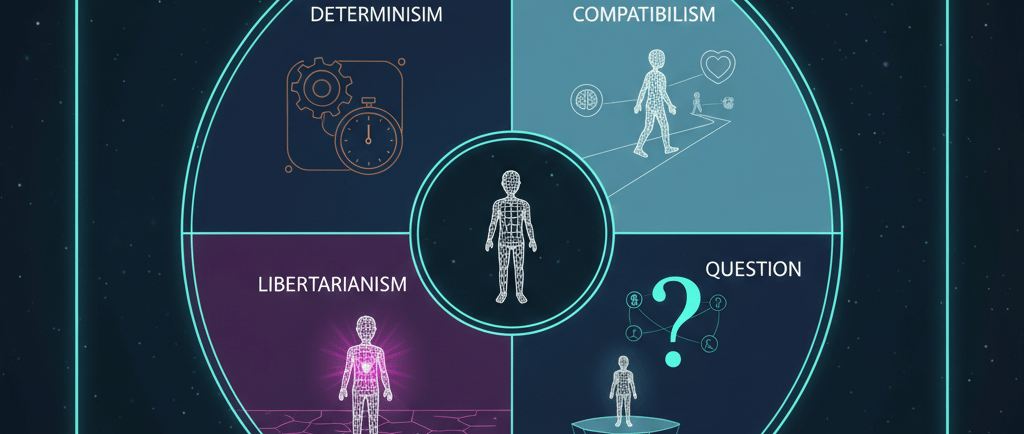
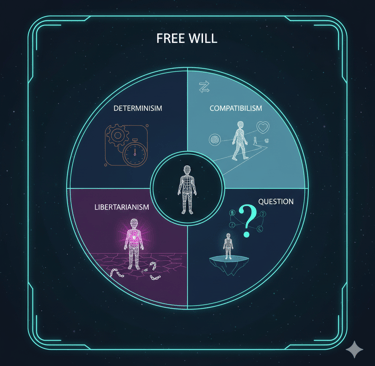
Determinism argues that every event, including human decisions, is caused by preceding events according to natural laws. If true, every thought and action is the inevitable result of prior causes—like a chain reaction that started long before you were born.
This view challenges free will, suggesting that choice is an illusion since everything is pre-set by biology, environment, and external causes.
2. Compatibilism: Freedom Within Determinism
Compatibilists believe free will and determinism can coexist. While acknowledging that cause and effect govern the universe, they argue that freedom means acting according to your desires and reasoning without external coercion.
You are free if your actions align with your motivations—even if those motivations have deterministic origins. Compatibilism preserves moral responsibility while accepting scientific explanations of causality.
3. Libertarianism: The Case for Genuine Freedom
Libertarian free will contends that we do have true freedom—our actions are not fully determined by past events. Proponents see humans as ultimate originators of their choices, capable of genuine alternative possibilities.
This view asserts that free will requires some degree of indeterminism or non-causal input, allowing for authentic control and moral accountability.
4. Hard Determinism: Freedom Is an Illusion
Hard determinists hold that since determinism is true, free will simply does not exist. All actions, they say, are predetermined and inevitable. Consequently, notions of moral praise or blame may require rethinking.
This perspective invites challenging questions about justice, ethics, and how society should handle responsibility.
Why This Matters
Free will debates shape how we understand ourselves, responsibility, and justice. Do we punish or praise because people freely choose, or because an unbroken chain of causes leads to actions?
Each position offers unique insights, inviting us to question how to live ethically and authentically in a complex, interconnected world.
Final Thought
Whether you lean toward determinism, compatibilism, libertarianism, or hard determinism, grappling with free will deepens your understanding of human nature. The question isn’t just academic—it touches what it means to be responsible, autonomous, and truly free.
Waste no more time arguing about what a good man should be. Be one - Marcus Aurelius
We suffer more often in imagination than in reality - Seneca
Wealth consists not in having great possessions, but in having few wants - Epictetus