
Is Stoicism a "Masculine" Philosophy?
Is Stoicism masculine? Discover how Stoic philosophy transcends gender, empowering both men and women to live wisely, calmly, and virtuously.
STOICISM
10/21/20252 min read
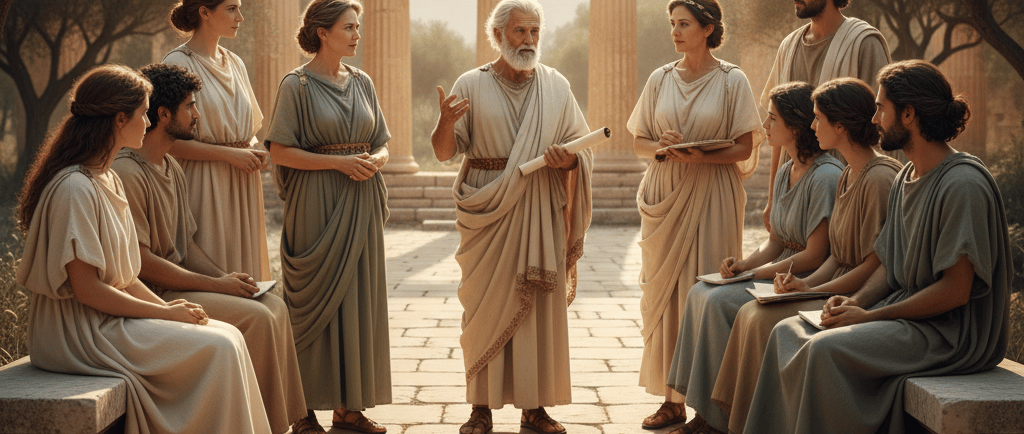
At first glance, Stoicism — with its calm resilience, discipline, and emotional control — might sound like a “masculine” philosophy. Social media often portrays Stoics as emotionless men quoting Marcus Aurelius under gritty gym lighting. But in truth, Stoicism was never meant for one gender. It’s a universal guide to living wisely — whether you’re a man, woman, or anyone seeking peace of mind in a chaotic world.
The Origins of the “Masculine” Label
Historically, most names we associate with Stoicism — Zeno, Seneca, Epictetus, Marcus Aurelius — were men. This wasn’t because Stoicism was designed for men, but because philosophy in ancient Greece and Rome was largely restricted to them. Women weren’t encouraged to study, speak publicly, or teach.
As a result, history preserved mostly male Stoic voices — giving the false impression that Stoicism itself is masculine. In reality, the Stoics taught something radically progressive: virtue has no gender.
Ancient Stoics on Equality
A lesser‑known fact from Roman philosophy is that Stoics like Musonius Rufus, a teacher of Epictetus, directly argued that women should study philosophy just like men. He wrote, “If men and women alike are born with the ability to reason, they should both strive for virtue.”
The Stoics believed all humans share the logos — the rational spark or divine reason within. That meant men and women are equally capable of wisdom, courage, and justice. In a society that placed women in domestic roles, that idea was revolutionary.
Even Seneca, often seen as reserved and rational, wrote two of his earliest philosophical letters to women — his mother Helvia and a grieving acquaintance named Marcia — advising them not as fragile souls but as equals in reason and inner strength.
Stoicism Is About Humanity, Not Masculinity
At its core, Stoicism is a manual for resilience — not a performance of toughness. Quiet strength, emotional regulation, and compassion are human virtues, not masculine ones. The Stoic ideal isn’t a “man who feels nothing,” but a human who responds wisely.
The modern world often markets “Stoic masculinity” as emotional detachment, but that misses the point. Ancient Stoics never taught indifference; they taught equanimity — the calm understanding that emotions should inform us, not dominate us.
Women Have Always Lived Stoically
Even though history under‑documented them, several women embodied Stoic principles. Philosophers point to Porcia Catonis (Brutus’s wife), Fannia, and Arria — Roman women who lived courageously and rationally in the face of tragedy. Their stories demonstrate that Stoic virtues — courage, wisdom, justice, self‑control — transcend gender and circumstance.
The Modern Stoic Movement Is Changing the Narrative
Today, more women and non‑binary thinkers are reclaiming Stoicism as a philosophy of balance, strength, and emotional intelligence. Teachers and writers like Massimo Pigliucci, Nancy Sherman, and Liz Gloyn have reframed Stoicism as deeply inclusive — emphasizing empathy, mindfulness, and ethical harmony rather than rigid stoicism or suppression.
Modern Stoicism encourages anyone to:
Build inner peace through reason, reflection, and daily practice
Act with virtue in relationships, work, and community
Balance emotion with logic — not deny it
Why Stoicism Appeals to Everyone
If Stoicism seems “masculine,” it’s because calm and discipline are sometimes mislabeled as masculine traits. But Stoicism simply teaches emotional maturity, and that’s something everyone benefits from — not just men.
Whether you’re navigating loss, love, career stress, or self‑doubt, Stoicism reminds you to act with integrity, stay grounded, and rise above chaos. That’s not male or female wisdom — it’s human wisdom.
Final Thought
Stoicism isn’t about being a man of steel; it’s about being a person of virtue.
It calls us not to suppress emotions but to use reason to guide them wisely. Far from being masculine, Stoicism invites everyone — regardless of gender — to live with strength, balance, and grace.
Waste no more time arguing about what a good man should be. Be one - Marcus Aurelius
We suffer more often in imagination than in reality - Seneca
Wealth consists not in having great possessions, but in having few wants - Epictetus