
Plato vs. Aristotle: The 5 Key Differences That Still Shape Our World Today
When you think of philosophy, two names stand out above the rest: Plato and Aristotle. Teacher and student, their ideas laid the foundations for Western thought—and their debates over truth, reality, and how to live still shape our world. Here’s a look at 5 major differences between Plato and Aristotle, and why they matter now more than ever.
NON-STOIC PHILOSOPHIES
1/8/20262 min read
1. Reality: The World of Forms vs. The World We See
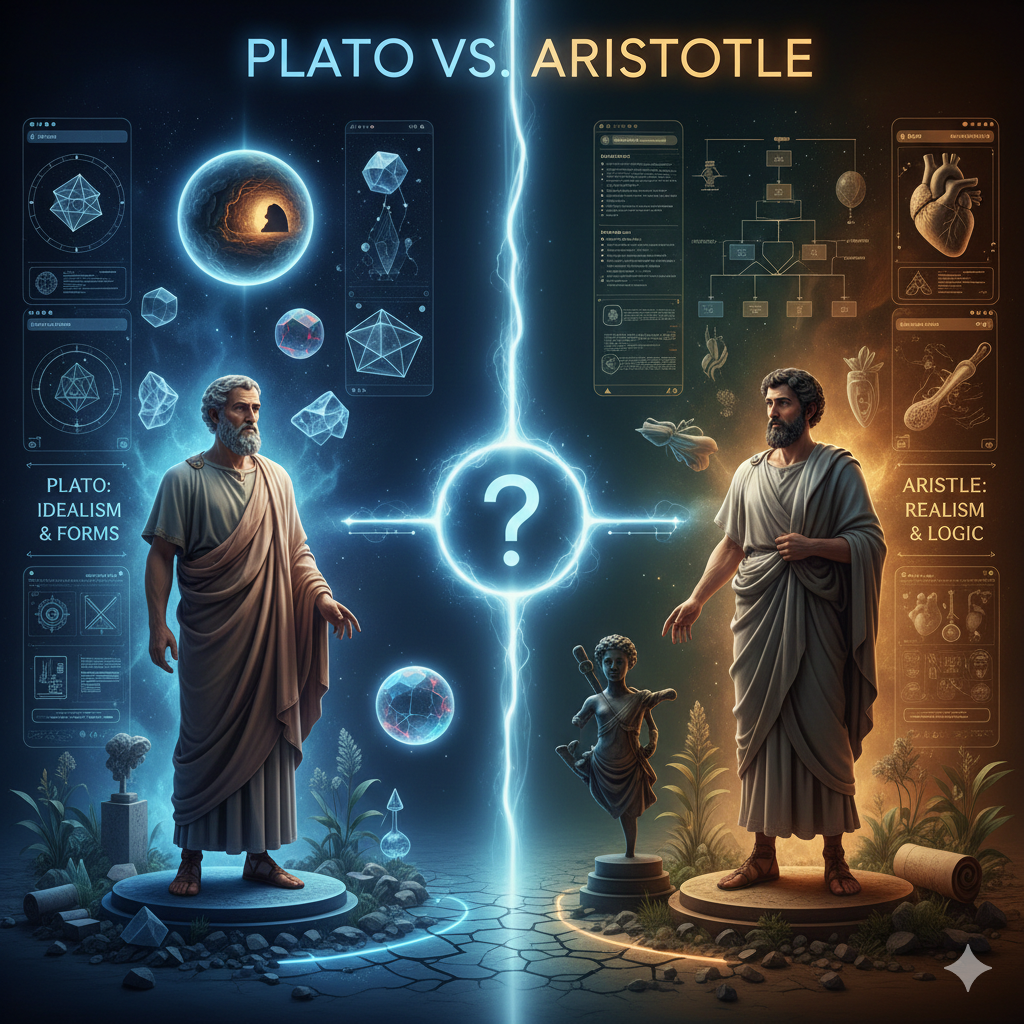
Plato believed true reality lay beyond the physical world, in a realm of perfect Forms or Ideas. Everything we experience is merely a shadow or copy of these ideal forms. For Plato, the Forms—like “Justice,” “Beauty,” or “Goodness”—exist eternally and are only knowable through reason.
Aristotle disagreed, saying that forms do not exist separately from physical things. He grounded reality in the material world, believing everything has form and substance, but these exist together in nature, not in some separate, abstract realm.
2. Knowledge: Inborn Ideas vs. Experience
For Plato, knowledge is innate—we “remember” truths through reasoning and philosophical contemplation. Learning is a kind of recollection of perfect forms our souls experienced before birth.
Aristotle countered that knowledge comes from sensory experience and careful observation of the natural world. Reason is important, but it starts with data from the senses—a foundation for the scientific method.
3. Ethics: The Goal of Life
Plato linked happiness with reaching the highest form—the “Good”—through reason and a just life. A philosopher’s task is to understand the Good and help society reflect this ideal.
Aristotle emphasized practical virtue: happiness, or eudaimonia, comes from developing good character and fulfilling your purpose as a human being. Virtue isn’t abstract; it grows through habits and living well within a community.
4. Politics: Philosopher-Kings vs. Constitutional Moderation
Plato’s ideal society is ruled by philosopher-kings—wise guardians who understand the realm of Forms and can govern justly. He envisioned a highly stratified society for stability and harmony.
Aristotle favored a more pragmatic approach, recommending balanced, constitutional government that includes the middle class. He believed in practical, context-specific solutions rather than utopian systems.
5. Science and Inquiry: Idealism vs. Empiricism
Plato’s focus on abstract reasoning inspired idealist philosophy and metaphysics. Aristotle, meanwhile, is often called the first true scientist—he systematized logic, pioneered biology, and believed in grounding theories in observation.
Final Thought
While Plato urged us to search for transcendent ideals, Aristotle invited us to study the world as it is. Their dialogue echoes in philosophy, science, politics, and even pop culture—reminding us that the search for truth and the art of questioning are as alive—and as necessary—as ever.
Waste no more time arguing about what a good man should be. Be one - Marcus Aurelius
We suffer more often in imagination than in reality - Seneca
Wealth consists not in having great possessions, but in having few wants - Epictetus