
Taoism vs. Stoicism: The "Flow" vs. The "Fortress" — A Guide to Two Paths of Inner Peace
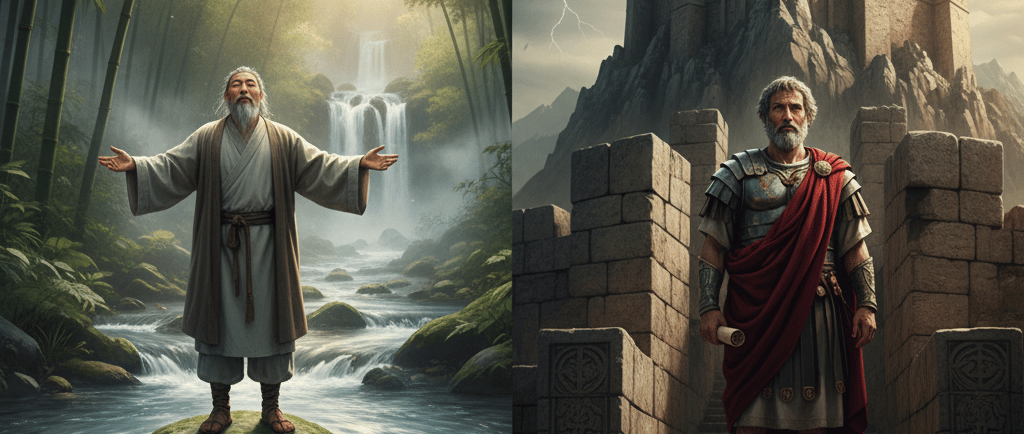
In a world rushing toward endless goals, finding inner peace might feel impossible. Yet two ancient philosophies—Taoism from China and Stoicism from Greece and Rome—offer powerful, complementary ways to calm the mind and live well. Think of Taoism as the art of going with life’s flow, while Stoicism builds a strong inner fortress of reason and resilience. Let’s explore their key differences and how they can guide us today.
STOICISM
11/6/20251 min read

1. Embracing Flow vs. Building Fortitude
Taoism teaches Wu Wei, or effortless action—moving harmoniously with life’s natural rhythms without force or resistance. It values spontaneity, humility, and adapting like water flowing around obstacles.
Stoicism, conversely, emphasizes fortitude. It invites us to actively cultivate inner strength by focusing on what we can control—our thoughts, actions, and attitudes—while accepting what we cannot. The Stoic mind is a fortress facing life’s storms with calm reason.
2. Nature and Harmony
Both philosophies value living in accordance with nature, but interpret it differently. Taoists see nature as a balance of Yin and Yang—opposing forces creating harmony through change and flow. Stoics view nature as a rational order (Logos), with humans as part of a cosmic whole guided by reason.
3. Response to Emotion
Stoicism advises mastering emotions through logic to avoid being overwhelmed. It teaches that emotions stem from judgments, and by changing our interpretations, we gain peace.
Taoism encourages acceptance of emotions as natural currents to flow with, not fight. By embracing emotions without judgment, Taoists seek balanced harmony.
4. Action and Social Role
Stoicism emphasizes active virtue and fulfilling social duties—contributing to family, community, and society as essential to a good life.
Taoism favors non-interference and simplicity, often encouraging stepping back from social complexity and power struggles to prioritize personal tranquility.
5. Philosophical Style and Practice
Stoicism is systematic and practical, with daily exercises in reflection and mindfulness.
Taoism is poetic and paradoxical, inviting intuitive understanding and meditation on the mysterious Tao (“the Way”).
Final Thought
Taoism and Stoicism offer distinct but harmonious approaches to navigate life’s challenges. Whether you seek to flow fluidly or build a strong fortress of reason, both philosophies guide us toward profound inner peace.
Waste no more time arguing about what a good man should be. Be one - Marcus Aurelius
We suffer more often in imagination than in reality - Seneca
Wealth consists not in having great possessions, but in having few wants - Epictetus