
The Unbreakable Mind: 7 Life-Changing Lessons from Epictetus
Discover 7 life-changing lessons from Epictetus, the ancient Stoic philosopher who transformed slavery into liberation. Learn how to build an unbreakable mind and true freedom.
STOICISM
11/5/20255 min read
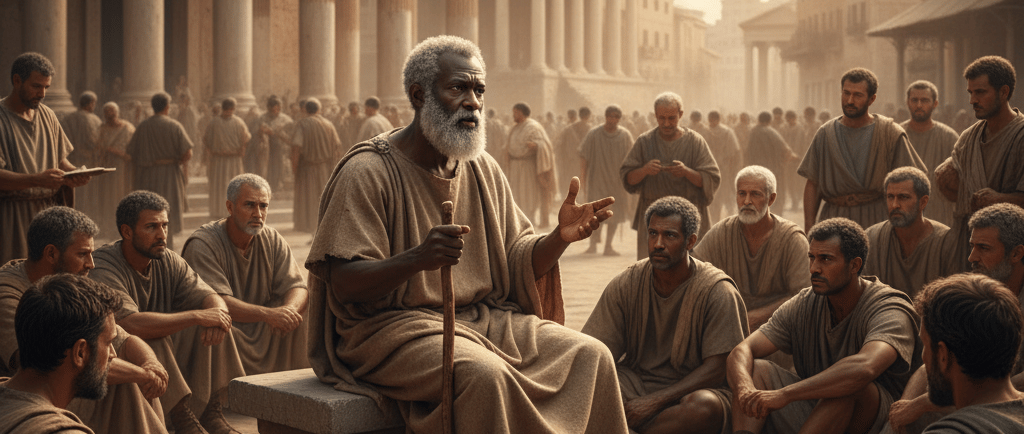
Epictetus was born into slavery. Whipped and tortured by his master, he endured unimaginable suffering. Yet from this darkness emerged one of history's most liberating philosophies. Unlike the emperors and wealthy patricians who followed Stoicism, Epictetus proved that inner freedom and unshakeable resilience could be achieved by anyone—regardless of circumstance. Here are seven profound, life-changing lessons from this remarkable philosopher that remain as relevant today as they were 2,000 years ago.
Who Was Epictetus?
Born around 50 AD in Phrygia (modern-day Turkey), Epictetus spent much of his early life as a slave. His master, Epaphroditus, reportedly twisted his leg for sport. When Epictetus calmly predicted his leg would break, and it did, he simply said, "I told you so"—demonstrating the extraordinary mental discipline that would define his philosophy. Eventually freed, Epictetus became one of the most sought-after philosophical teachers of Rome, teaching that true freedom comes from mastering your mind, not your circumstances.
7 Life-Changing Lessons from Epictetus
Lesson 1: The Dichotomy of Control—Your Ultimate Superpower
The Teaching:
"Some things are up to us and some things are not up to us. Up to us are opinion, motivation, desire, aversion, and, in a word, whatever is of our own doing; not up to us are our body, our property, reputation, and office, and, in a word, whatever is not of our own doing."
Why It Changes Everything:
Most suffering comes from trying to control things outside our power. Epictetus teaches that only your judgments, intentions, and actions lie within your control—everything else doesn't. When you stop wasting energy on external circumstances and focus entirely on your thoughts and choices, you become invincible.
Modern Application:
You can't control traffic delays, others' opinions, market crashes, or illness. But you can control your response, attitude, effort, and character. This shift in focus removes the illusion of helplessness and restores genuine agency over your well-being.
Lesson 2: Your Judgments Create Your Reality
The Teaching:
"It is not things themselves that disturb us, but our opinions about them."
Why It Changes Everything:
Epictetus discovered what modern psychology validates: external events don't determine your emotional state—your interpretation does. Two people facing identical circumstances can feel completely different based on their judgments. This is liberating because you can change your interpretations.
Modern Application:
Losing a job could be catastrophic or an opportunity. Rejection could be devastating or redirection. Failure could be shame or education. The event is neutral; your judgment gives it meaning. By examining and adjusting your opinions, you gain mastery over your emotional life.
Lesson 3: Freedom Comes From Discipline, Not Escape
The Teaching:
"Freedom is not achieved by satisfying desire, but by eliminating it."
Why It Changes Everything:
Most people believe freedom means doing whatever they want. Epictetus teaches the opposite: true freedom comes from disciplining desires so you're not enslaved by them. A person who craves money, status, or pleasure constantly is imprisoned by those cravings. A person who has eliminated excessive desires is free.
Modern Application:
In a consumer culture designed to trigger endless wanting, Epictetus offers radical liberation. By distinguishing between genuine needs and manufactured desires, and by disciplining your wants, you escape the hamster wheel of consumption and comparison. Real freedom is inner freedom.
Lesson 4: Accept What You Cannot Change—And Thrive Anyway
The Teaching:
"Seek not that the things which happen should happen as you wish; but wish the things which happen to be as they are, and you will have a tranquil flow of life."
Why It Changes Everything:
Resistance to reality creates suffering. Epictetus doesn't counsel resignation—he advocates acceptance of what is, combined with maximum effort toward what can be changed. This paradox is powerful: by accepting reality fully, you paradoxically gain the clarity and energy to improve it.
Modern Application:
You can't change your past, your genetics, or others' choices. But instead of wasting energy on "why me?" or "it shouldn't be this way," you accept what is and direct your power toward what comes next. This acceptance doesn't mean passivity—it means strategic focus on what actually matters.
Lesson 5: Your Character Is Your Only True Possession
The Teaching:
"First say to yourself what you would be; and then do what you have to do."
Why It Changes Everything:
Everything external can be taken from you—wealth, health, status, relationships. Only character cannot be stolen. Epictetus teaches that your true wealth is your virtue: integrity, courage, wisdom, and justice. Build these, and you're unshakeable.
Modern Application:
In a world obsessed with external metrics (followers, salary, possessions), Epictetus invites you to focus on internal metrics (integrity, growth, kindness). Ask yourself: "What kind of person do I want to be?" Then act consistently with that vision. This builds an unbreakable sense of self-worth independent of external validation.
Lesson 6: Most People Are Confused—Practice Compassion
The Teaching:
"If anyone can refute me—show me I'm making a mistake—I'll gladly change. But if I'm right, why are you laughing at me? A good answer would be better than laughing."
Why It Changes Everything:
Epictetus didn't take offense at others' rudeness or ignorance. He recognized that most people operate from confusion and fear. This perspective naturally cultivates compassion. When you understand others are doing the best they can with their level of understanding, anger dissolves.
Modern Application:
People hurt you not usually from malice, but from ignorance, fear, or their own pain. This doesn't excuse harm, but it prevents you from taking it personally. By practicing understanding, you maintain your peace regardless of others' behavior.
Lesson 7: Death Is Not Evil—Dishonor Is
The Teaching:
"He who fears death will never do anything worthy of a man who is alive."
Why It Changes Everything:
Epictetus teaches that death is natural and not evil in itself. What's truly evil is living dishonorably—compromising your values, acting cowardly, betraying your principles. This shifts what you fear: not death or hardship, but becoming someone you despise.
Modern Application:
When you're no longer ruled by the fear of death or suffering, you become free to take meaningful risks, speak truth, help others, and live authentically. Many people live small, safe lives driven by fear of pain. Epictetus invites you to live boldly guided by principle instead.
How These Lessons Transform Your Life
When integrated together, Epictetus's teachings create a framework for unshakeable resilience:
Clarity on what matters (your judgments and character)
Freedom from obsession with external outcomes
Acceptance of reality without resistance
Discipline of desires and impulses
Compassion for others' confusion
Courage to live by principle
Peace from alignment between values and actions
Why Epictetus Matters More Than Ever
In our modern age of:
Information overload creating confused judgments
Social media amplifying comparison and craving
Uncertainty about what we can control
Endless pursuit of external validation
Anxiety about circumstances beyond our control
Epictetus's philosophy is a breath of fresh air. He proves that you don't need perfect circumstances to be free, happy, and powerful. You need only to master your mind.
The Legacy of an Unbreakable Mind
Epictetus's greatest achievement wasn't his writings or his fame—it was the example he lived. A former slave who suffered torture and oppression became one of the most influential philosophers in history, teaching that true freedom comes from within.
His legacy whispers to us: "Your circumstances do not define you. Your response to them does. Master your mind, and you become unbreakable."
Practical Exercise: Apply Epictetus Today
Choose one area where you're struggling:
Identify what's in your control and what isn't
Stop investing energy in what's not in your control
Examine your judgments about the situation—are they facts or opinions?
Ask: "What would it mean to accept this and move forward anyway?"
Focus on what character strength this situation invites you to develop
The path to an unbreakable mind begins with a single choice to think differently.
Waste no more time arguing about what a good man should be. Be one - Marcus Aurelius
We suffer more often in imagination than in reality - Seneca
Wealth consists not in having great possessions, but in having few wants - Epictetus