
What Is Nihilism? (And Why It's Not as Depressing as You Think)
Nihilism is a philosophy that often gets a bad rap. Many associate it with hopelessness, despair, and the belief that life is meaningless. But when you dig a little deeper, nihilism is more nuanced—and surprisingly offers a powerful perspective for navigating life’s uncertainties.
NON-STOIC PHILOSOPHIES
12/1/20251 min read

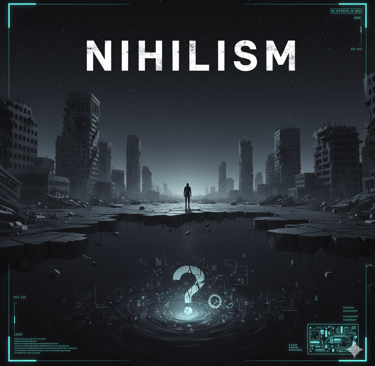
Understanding Nihilism
At its core, nihilism is the belief that life lacks inherent meaning, objective values, or ultimate purpose. It questions the foundations of religion, morality, and truth that societies often take for granted. Rather than accepting pre-defined meanings, nihilism challenges us to confront the “nothingness” beneath established narratives.
Not Just Pessimism
While nihilism involves radical skepticism about traditional values, it’s not simply about despair. In fact, many thinkers see nihilism as a clearing—a moment where old meanings dissolve, making space for new interpretations and freedom.
Philosophers like Friedrich Nietzsche explored nihilism deeply, acknowledging its challenges, but also advocating for creating your own values and meaning after facing that void.
Different Dimensions of Nihilism
Nihilism comes in many forms:
Existential nihilism questions life’s purpose.
Moral nihilism denies objective morality.
Epistemological nihilism doubts knowledge or truth.
Cosmic nihilism views the universe as indifferent.
Each reveals a layer of skepticism that invites reflection rather than resignation.
How Nihilism Can Be Empowering
By accepting that life has no predetermined script, you gain the freedom to write your own story. This perspective encourages authenticity, creativity, and personal responsibility. It helps you live fully in the present, unburdened by imposed expectations.
Final Thought
Nihilism is less a pit of despair and more a philosophical crossroads—challenging, yes, but also full of possibility. Understanding it can open doors to new ways of meaning-making and living with courage in an uncertain world.
Waste no more time arguing about what a good man should be. Be one - Marcus Aurelius
We suffer more often in imagination than in reality - Seneca
Wealth consists not in having great possessions, but in having few wants - Epictetus